Berliner Boersenzeitung - BRICS-Dollar challenge

EUR -
AED 4.32811
AFN 74.776194
ALL 95.5598
AMD 434.743711
ANG 2.109009
AOA 1081.673099
ARS 1641.587989
AUD 1.625458
AWG 2.120928
AZN 2.006908
BAM 1.958299
BBD 2.373449
BDT 144.854832
BGN 1.965514
BHD 0.444629
BIF 3506.601389
BMD 1.178293
BND 1.496341
BOB 8.14239
BRL 5.784243
BSD 1.178424
BTN 112.256666
BWP 15.844352
BYN 3.295433
BYR 23094.55216
BZD 2.370054
CAD 1.611965
CDF 2605.206621
CHF 0.916357
CLF 0.026871
CLP 1057.576643
CNY 8.006469
CNH 8.003629
COP 4437.34719
CRC 540.093732
CUC 1.178293
CUP 31.224777
CVE 110.789009
CZK 24.330818
DJF 209.406302
DKK 7.470969
DOP 69.696476
DZD 155.82675
EGP 62.111656
ERN 17.674402
ETB 185.114589
FJD 2.572808
FKP 0.864211
GBP 0.865727
GEL 3.151917
GGP 0.864211
GHS 13.302514
GIP 0.864211
GMD 86.015502
GNF 10342.473112
GTQ 8.993698
GYD 246.476591
HKD 9.224152
HNL 31.354184
HRK 7.535071
HTG 154.230067
HUF 356.021657
IDR 20527.580905
ILS 3.419231
IMP 0.864211
INR 112.402895
IQD 1543.564456
IRR 1545393.757698
ISK 143.610156
JEP 0.864211
JMD 185.908793
JOD 0.835409
JPY 185.169977
KES 152.176817
KGS 103.041603
KHR 4727.903983
KMF 493.704814
KPW 1060.464079
KRW 1738.171133
KWD 0.362844
KYD 0.982061
KZT 545.961269
LAK 25863.541867
LBP 105516.18095
LKR 379.587567
LRD 215.892811
LSL 19.359245
LTL 3.479194
LVL 0.712737
LYD 7.45275
MAD 10.718052
MDL 20.197944
MGA 4913.483742
MKD 61.645182
MMK 2473.858305
MNT 4214.410872
MOP 9.503247
MRU 47.07294
MUR 55.061386
MVR 18.157479
MWK 2052.587176
MXN 20.251448
MYR 4.621855
MZN 75.291052
NAD 19.371046
NGN 1611.48105
NIO 43.25527
NOK 10.826044
NPR 179.609703
NZD 1.976558
OMR 0.453017
PAB 1.178404
PEN 4.04037
PGK 5.11291
PHP 72.070281
PKR 328.284123
PLN 4.239677
PYG 7243.211449
QAR 4.291938
RON 5.206287
RSD 117.38983
RUB 86.72262
RWF 1722.665064
SAR 4.420701
SBD 9.464357
SCR 16.210598
SDG 707.568992
SEK 10.859979
SGD 1.495024
SHP 0.879715
SLE 28.988677
SLL 24708.22056
SOS 673.392792
SRD 44.072298
STD 24388.29602
STN 24.979822
SVC 10.311288
SYP 130.257911
SZL 19.370631
THB 38.047039
TJS 11.030115
TMT 4.13581
TND 3.371686
TOP 2.837048
TRY 53.454112
TTD 7.988261
TWD 36.956046
TZS 3078.293969
UAH 51.788921
UGX 4430.691071
USD 1.178293
UYU 46.980608
UZS 14310.374453
VES 588.952344
VND 31018.575797
VUV 139.719435
WST 3.189754
XAF 656.800638
XAG 0.013691
XAU 0.000249
XCD 3.184397
XCG 2.123837
XDR 0.816849
XOF 654.537357
XPF 119.331742
YER 281.140664
ZAR 19.330384
ZMK 10606.055934
ZMW 22.280713
ZWL 379.410019
  • RBGPF

    0.2700

    63.18

    +0.43%

  • CMSC

    0.0100

    23.12

    +0.04%

  • RYCEF

    0.4200

    16.79

    +2.5%

  • BTI

    2.1600

    60.44

    +3.57%

  • GSK

    -0.6000

    49.81

    -1.2%

  • NGG

    0.2700

    87.16

    +0.31%

  • CMSD

    0.0763

    23.61

    +0.32%

  • BCE

    0.1400

    24.28

    +0.58%

  • RIO

    2.5200

    107.9

    +2.34%

  • RELX

    -0.3100

    33.27

    -0.93%

  • VOD

    0.1200

    16.32

    +0.74%

  • JRI

    -0.0197

    13.13

    -0.15%

  • AZN

    -0.9900

    181.86

    -0.54%

  • BCC

    -1.4700

    69.2

    -2.12%

  • BP

    0.8800

    44.22

    +1.99%


BRICS-Dollar challenge


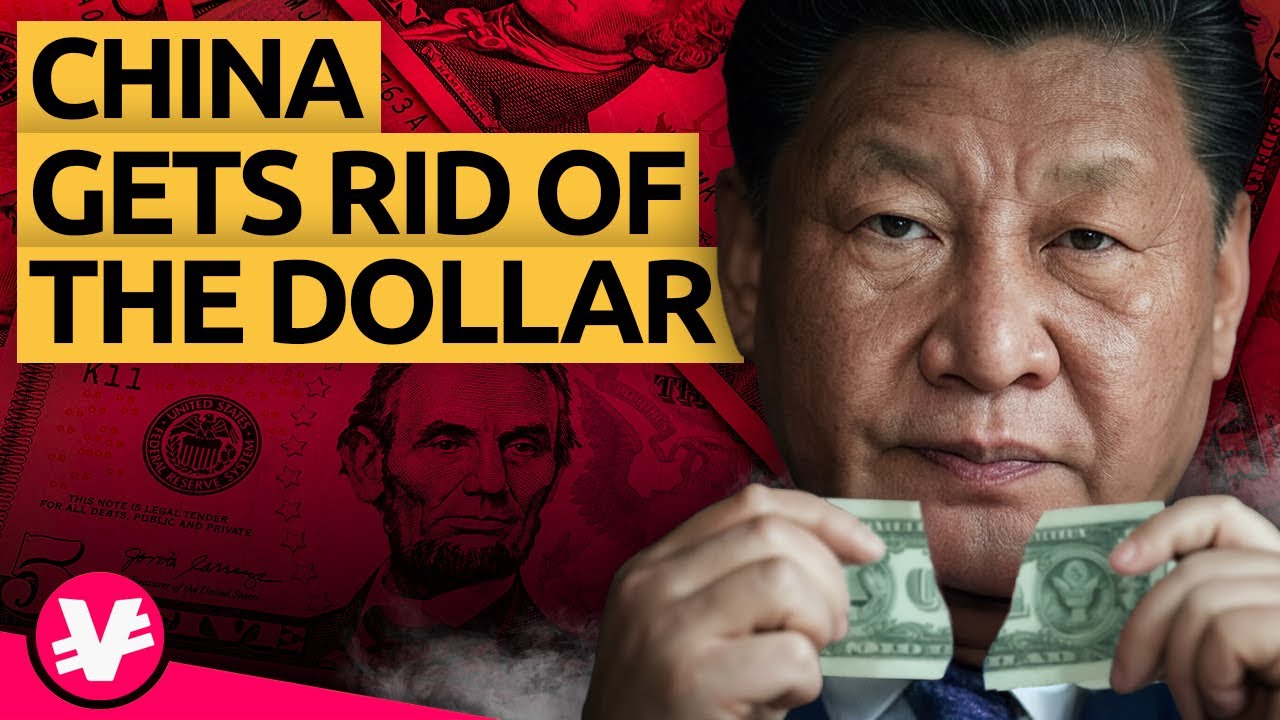
The BRICS countries are quietly mobilizing economic forces that could destabilize the US dollar’s long-standing dominance — at a time when the dollar appears increasingly vulnerable. Over the past months a clear shift has emerged: the grouping of major emerging economies is focusing on decreasing dollar dependency through bilateral trade in national currencies, while strengthening independent payment systems.

Under its 2025 rotating presidency, one of the flagship initiatives is the expansion of BRICS PAY — a payment messaging platform designed to allow member states to settle transactions without using the dollar or traditional Western-dominated banking rails. This development signals a subtle, yet significant, attempt to reshape international trade and finance.

Although plans for a single unified “BRICS currency” have been shelved for now — according to recent statements by officials from the presidency country — the strategic pivot toward local-currency settlements and alternative systems for cross-border payments remains very much alive. The goal appears to be less about instant replacement of the dollar, and more about gradual erosion of its monopoly.

The motivations are manifold. Many BRICS governments view the dollar’s status not simply as an economic norm, but as a lever of political pressure. Given recent sanctions regimes, trade wars, and sharp swings in US fiscal and monetary policy, trusting a currency so tightly linked to US geopolitical decisions has become increasingly unpalatable. The emerging economies behind BRICS are leveraging their growing share of global trade, commodities, and population to assert greater independence — both economic and political.

Analysts warn that while the dollar will likely remain dominant for the foreseeable future — due to its deep liquidity, global acceptance, and entrenched role in reserves and trade — the erosion of its role could have ripple effects. A sustained move by a major bloc of countries to settle trade in local currencies may gradually reduce demand for dollar-denominated reserves, alter global asset flows, and weaken the influence of US financial leverage.

For countries and investors around the world, the underlying message is: the financial order may be entering a period of structural transition. While immediate displacement of the dollar seems unlikely, the steady developments within BRICS hint at a future where global transactions are more multipolar, diversified and less US-centric.

In short: A large-scale challenge to the USD hegemony is being built not through bold proclamations, but through practical infrastructure and shifting economic habits — and its effects may unfold quietly, yet profoundly.