BCC
1.0400

The Syrian Arab Republic has endured more than a decade of civil war and geopolitical strife. After opposition groups led by Hay’at Tahrir al‑Sham forced President Bashar al‑Assad from power on 8 December 2024, a transitional government promised a path toward elections and reform. Yet the promise of peace has not ended suffering. Instead, violence intensified in early 2025 when identity‑based massacres by government forces and allied militias killed at least 1,400 people in Alawi‑majority areas of Tartous, Latakia and Hama, and later more than 1,500 Druze and Bedouin civilians were killed in Suwayda. The transitional authorities created commissions on transitional justice and missing persons, but human rights monitors report that these bodies have made little progress in consulting victims or ensuring accountability. A new constitution approved in March 2025 concentrates power in the executive and grants the president broad authority, raising fears of renewed authoritarianism.
Humanitarian emergency
The change of government has done little to alleviate an extraordinary humanitarian crisis. More than 90 percent of Syrians live below the poverty line and over 16.5 million people require aid. Food insecurity is acute: the Famine Early Warning Systems Network estimates that 6.99 million people will face crisis levels of hunger through April 2026, meaning at least a quarter of the population is at risk. Years of fighting have decimated irrigation systems and public infrastructure, and three consecutive years of drought have destroyed crops. Funding shortfalls have left one million Syrians without monthly food assistance and only 8 percent of subsistence farmers received emergency agricultural support last year.
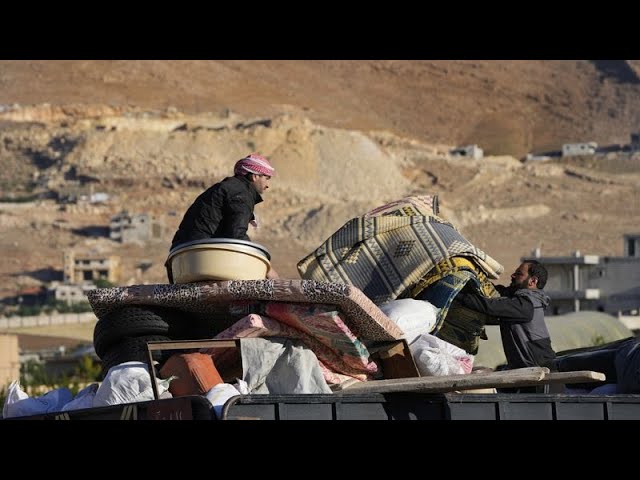
The war has also produced one of the world’s largest displacement crises. Even after the fall of Assad, more than 4.5 million Syrian refugees remain abroad while over 7 million people are internally displaced. A fragile economy and limited reconstruction have discouraged returns. In October 2025 the International Organization for Migration estimated that roughly 581,000 refugees had returned home since the change of government. However, countries that once offered safe haven are tightening restrictions: European states have halted processing of Syrian asylum claims and the United States announced an end to Temporary Protected Status in September 2025. Neighboring countries like Türkiye and Lebanon have continued to summarily deport Syrians.
Systemic violence and insecurity
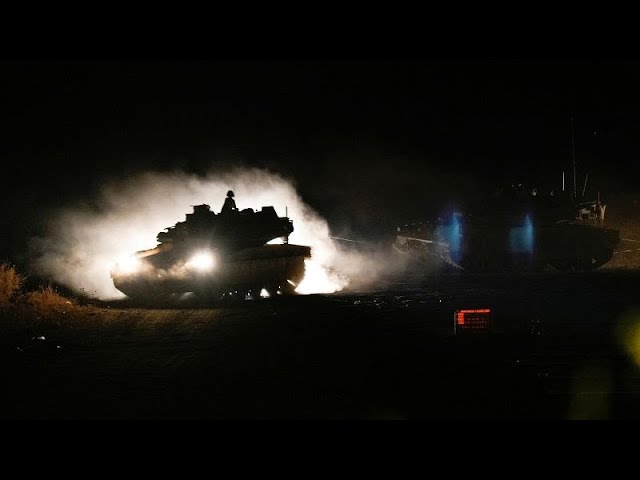
Human rights monitors document ongoing abuses across Syria. Security forces and armed groups carry out extrajudicial killings, torture, enforced disappearances and arbitrary detentions. The Independent International Commission of Inquiry on the Syrian Arab Republic notes that targeted attacks based on religious affiliation, ethnicity, age and gender may amount to war crimes. The Commission reports that the government has initiated arrests and trials of only 14 alleged perpetrators, leaving the responsibility of senior officials unaddressed. In the south, Israeli forces have pushed into the UN‑monitored demilitarized zone between the Golan Heights and Quneitra, establishing military posts and seizing villages. Residents report forced displacement, home demolitions, denial of access to farmland and transfer of detainees to Israel. Israel also intensified airstrikes on Syrian military infrastructure, carrying out more than 277 strikes against arms depots, missile facilities and air defense batteries between December 2024 and September 2025.
Violence is not confined to the south. In mid‑2025 clashes between government‑aligned forces and Druze fighters in Sweida killed around 1,000 people, including hundreds of civilians. Arbitrary detentions by the Syrian Democratic Forces in the northeast continued, and tens of thousands of alleged ISIS suspects and their families are held in degrading conditions at the al‑Hol and Roj camps. Although the transitional government signed an agreement with the SDF to integrate its institutions into the state, implementation has stalled.
Struggling institutions and lost generations
The protracted conflict has shattered basic services. Infrastructure for shelter, health care, electricity, water and sanitation is in ruins. Fuel shortages and soaring food prices compound the hardship. The education system is near collapse: 40 percent of school infrastructure has been destroyed and 2.5 million children are out of school. An additional 1.6 million children risk dropping out, raising the specter of multiple lost generations. While humanitarian organizations have established informal education centers and child‑friendly spaces, the scale of need far exceeds available resources. Aid agencies warn that without immediate funding, millions of children will never return to a classroom.
Public sentiment and media neglect
Many observers and Syrians living abroad express frustration that the world’s attention has shifted elsewhere. They criticize mainstream media for devoting little coverage to Syria’s continuing crises and lament that global compassion fatigue leaves Syrian civilians to suffer in silence. Commenters on international forums argue that the international community responds swiftly to crises elsewhere but remains indifferent to Syria’s tragedy. These voices call for renewed media focus, humanitarian solidarity and accountability for those responsible for atrocities. Others warn that regional and great‑power rivalries continue to fuel conflict, with foreign military interventions aggravating violence and undermining Syria’s sovereignty. There is widespread skepticism about the transitional government’s commitment to human rights reforms, given the slow pace of accountability and its concentration of power. Despite these misgivings, many Syrians still pin their hopes on the prospect of a constitution that enshrines rule of law and inclusive governance.
Conclusion
The horrors unfolding in Syria are not relics of the past but present‑day realities. A change of regime has not brought peace; instead, Syrians face hunger, displacement, renewed violence and an uncertain political future. International observers warn that unresolved grievances and rampant impunity threaten to ignite further sectarian violence. To prevent further tragedy, the world must not look away. Urgent humanitarian aid is needed to avert famine and rebuild shattered infrastructure. Meaningful accountability for war crimes, inclusive political reform and the safe return of refugees are essential to Syria’s future. Until these goals are met, the Syrian people’s suffering will remain a forgotten tragedy.