VOD
0.1300

Hungary’s April 2026 parliamentary elections upended a 16‑year epoch. Péter Magyar’s Tisza Party, a relatively new centrist movement, swept to victory with 138 of 199 parliamentary seats, ending the long rule of Viktor Orbán and his nationalist Fidesz party. The scale of the win handed Magyar a two‑thirds majority in the Hungarian parliament, allowing him to reshape the constitution and policy without Fidesz support. The triumph was widely celebrated across Europe. European Commission President Ursula von der Leyen congratulated Magyar and proclaimed that Hungary had “chosen Europe.” Polish Prime Minister Donald Tusk posted a jubilant video declaring that “Europe is back,” and Germany’s Chancellor Friedrich Merz called the result a sign that the pendulum was swinging away from right‑wing populism.
Yet within hours of the celebrations Brussels began whispering that its long‑standing feud with Budapest might finally be over. Officials mused that billions of euros in frozen cohesion funds could soon flow to Budapest again, that Hungary would stop vetoing aid to Kyiv, and that a new pro‑European partnership would emerge. In the eyes of many in the European quarter, Orbán’s defeat seemed to mark the end of illiberal drift in Central Europe. But such optimism reveals a miscalculation about both Magyar’s priorities and the region’s shifting balance of power.
What Brussels expected versus what Magyar promised
Orbán’s downfall was driven more by domestic grievances than by ideological shifts. Voters were angered by corruption benefiting Fidesz cronies, frustration with soaring prices and low wages, and deteriorating public services. Many simply wanted change after four consecutive Fidesz administrations. Péter Magyar harnessed this desire by promising to root out corruption, restore the rule of law, improve healthcare and education, and increase wages and pensions. He pledged to make Hungary a reliable member of the European Union but also insisted on preserving national sovereignty. During the campaign he carefully avoided polarising cultural issues and rejected labels of “left” or “right.”
Some of his positions align comfortably with Brussels. He has vowed to unblock a €90 billion EU loan package for Ukraine that Orbán repeatedly vetoed and to accelerate negotiations to bring Kyiv closer to the EU. He wants to unlock EU funds to stimulate Hungary’s stagnant economy; the Tisza manifesto calls for phasing out Russian energy imports and reducing dependence on Moscow by 2035. However, he also opposes the EU’s migration and asylum pact and insists on maintaining the border fence built by Fidesz. At a post‑election press conference he said Hungary would continue buying Russian energy for now because it remained the cheapest option. He also stressed that he would speak to Vladimir Putin if the Russian president called him – though he doubted any call would end the war in Ukraine.
For Brussels, releasing frozen funds will hinge on rapid institutional reforms to restore judicial independence and dismantle Orbán’s patronage networks. Donald Tusk’s experience in Poland offers a cautionary example: when his Civic Coalition returned to power in Warsaw in 2023, the European Commission released €137 billion in blocked funds based on a plan to undo rule‑of‑law breaches. Two years later, Tusk still grapples with a conservative president and a lack of parliamentary supermajority, and the reforms are far from complete. Influential voices in Brussels argue that funds for Hungary should be freed gradually and conditional on tangible progress. Others see the money as leverage to coax Magyar into accepting EU migration policies and deeper energy diversification. The assumption that the new Hungarian government will automatically align with Brussels on every issue is therefore premature.
Lessons from Poland and a regional realignment
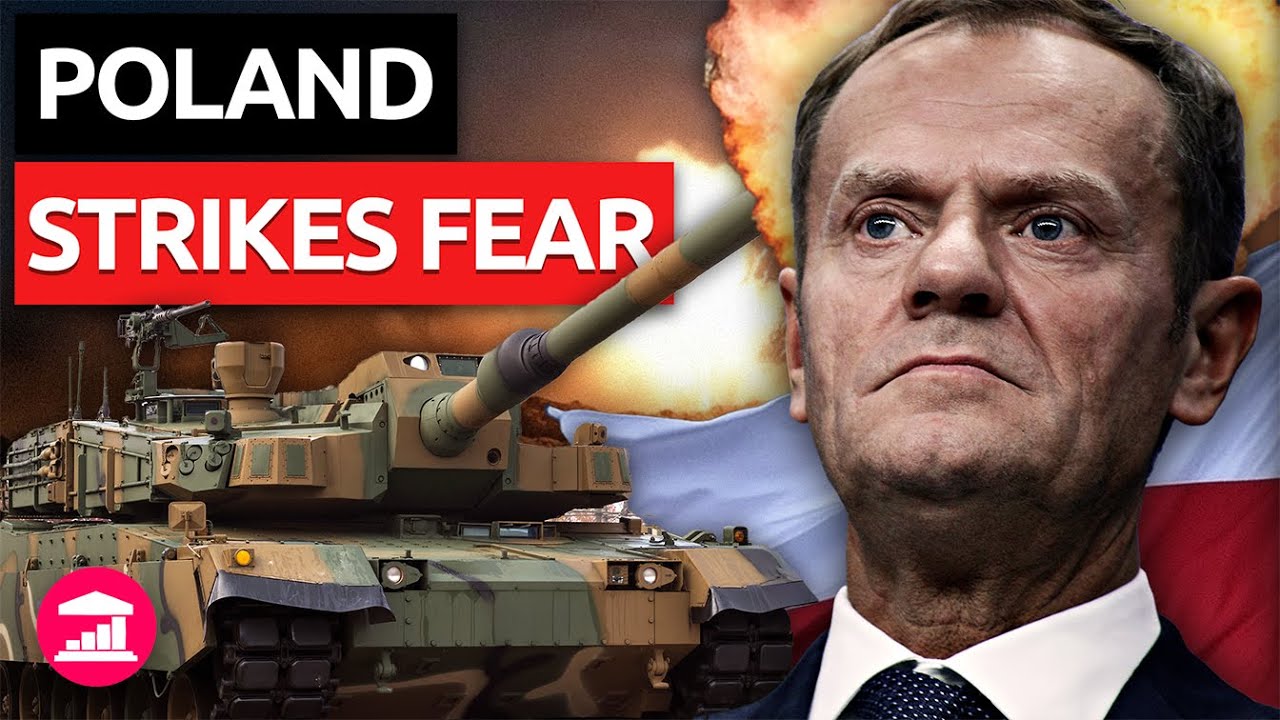
The political earthquake in Budapest has significant repercussions for Central Europe’s geopolitical balance. Hungary is one of the four Visegrád countries, alongside Poland, the Czech Republic and Slovakia. Under Orbán, Budapest was a constant irritant at EU meetings: he delayed aid packages for Ukraine, cultivated close ties with Moscow and Beijing, and used his veto power to block EU initiatives. Poland, led by Donald Tusk since 2023, adopted the opposite course – championing Ukraine’s cause, strengthening ties with Brussels and Washington, and sharply criticising Orbán. Tusk once complained that while there was no “Ukraine fatigue” in the EU, there was “Orbán fatigue.”
Magyar has signalled that his first foreign trip will be to Warsaw. He told supporters on election night that Hungary would rebuild cooperation within the Visegrád group and that Warsaw would be the starting point. Analysts expect a rapid rapprochement between Budapest and Warsaw. The shared agenda includes support for Ukraine, respect for the rule of law, and a pro‑European outlook while protecting national sovereignty. For Poland, Magyar’s victory offers an opportunity to regain influence in Central Europe. Warsaw lost a like‑minded partner when Slovakia elected the populist Robert Fico in 2025 and when the Czech Republic’s Andrej Babiš returned to power in 2025. Fico and Babiš have echoed Orbán’s anti‑Brussels rhetoric and opposed sanctions on Russia. With Orbán gone, Poland may find itself the senior partner in an emerging Warsaw–Budapest axis, potentially supported by progressive forces in Slovakia and the Czech opposition. This could strengthen Tusk’s position inside the EU Council, especially on foreign and security policies.
The Foreign Policy Research Institute notes that Budapest’s relations with Warsaw, Prague and Bratislava will evolve and change the geopolitical dynamic of the Visegrád group. Hungary’s alliance with Poland could counterbalance the populism of Prague and Bratislava. Czech Prime Minister Babiš praised Orbán and opposed deeper EU integration, while Slovak leader Fico cultivated pro‑Moscow positions. With Orbán defeated, both leaders may feel isolated; Fico could be “sweating bullets,” now that he can no longer hide behind Orbán’s confrontations with Brussels. Hungary’s new government therefore opens the possibility of a more pro-European Visegrád centre led by Warsaw and Budapest. Brussels’s miscalculation lies in underestimating how this new axis could shift power away from traditional EU institutions and into regional alliances.
The challenges ahead: dismantling Orbanism and unlocking funds
Magyar inherits a state apparatus deeply entangled with Fidesz loyalists. Orbán’s decade‑and‑a‑half in power saw the rewriting of Hungary’s constitution, reshaping of electoral rules and control of the judiciary, media and civil service. The Fidesz government channelled billions of euros in EU funds to politically connected foundations and think tanks, such as the Mathias Corvinus Collegium, now one of Europe’s best-funded conservative institutes. Dissolving this network will require constitutional amendments, legislation and a purge of Fidesz appointees. ECFR analysts warn that restoring the rule of law in a post‑illiberal system is extremely difficult: Poland’s own attempts to reverse PiS reforms show that dismantling entrenched patronage takes time and can provoke resistance from entrenched interests.
Magyar’s two‑thirds majority gives him the legal means to effect sweeping reforms quickly. However, he must also manage expectations at home. Many voters hope for immediate improvements in living standards and the public sector, while Tisza’s ideologically diverse coalition includes conservatives, liberals and centrists who may disagree over social issues. If reforms lag or economic pain persists, his support could erode. Brussels’s miscalculation would be to assume that early gestures – such as releasing funds or lifting vetoes – will automatically entrench pro-European forces. The EU must instead calibrate incentives carefully, rewarding genuine progress while avoiding the perception of meddling. Otherwise, Eurosceptic forces in Hungary could exploit frustration and polarisation.
Western perceptions and Hungarian public sentiment
Outside observers often frame the election as a battle between liberalism and conservatism. Many comments from Hungarian social media suggest a more nuanced reality. Some Hungarians emphasise that Magyar never promised to be “ultra-left liberal” but campaigned for justice, fairness and a functioning economy within the EU. Others stress that he is neither right nor left but a pragmatist who promises checks and balances and the right to protest. Many hope his government can restore pride in being Hungarian and re-establish Hungary as a respected EU member.
Critics note that Hungary continues to have the EU’s highest value-added tax and that self-employed workers faced steep tax hikes under Fidesz. There is also scepticism toward Western pronouncements: one commenter said he would judge Magyar by his actions, not by EU leaders’ praise. Another noted that the key task is rebuilding democracy with checks and balances to counter corruption, Russian influence and propaganda. Some suggested that Western Europe misunderstands Hungarian voters, who care about practical issues like wages and public services more than ideological labels. Still others highlight how Poland and other eastern nations stand to gain from Orbán’s defeat, while Russia and Putin stand to lose. These sentiments reveal a complex mix of hope, caution and regional solidarity that Brussels would do well to consider.
Conclusion: a turning point with caveats
The 2026 Hungarian elections mark a turning point for both Hungary and the European Union. Orbán’s defeat removed one of Brussels’s most vexing adversaries and signalled voter fatigue with corruption and economic stagnation. Péter Magyar’s victory opens the door to restoring democratic institutions, improving public services and mending relations with the EU. But Brussels’s expectations must be tempered by the realities of post‑illiberal transitions. Unlocking frozen EU funds and reshaping Hungary’s judiciary will take time and political capital. Magyar’s positions on migration and energy show that he will not automatically align with every EU policy. Meanwhile, Poland’s Donald Tusk stands poised to gain influence through a renewed Warsaw–Budapest partnership, shifting the centre of gravity within the Visegrád group.
Rather than celebrating prematurely, EU leaders should engage patiently with Hungary’s new government, offering support while maintaining conditionality. They must recognise that Central Europe’s political landscape is fluid: populism may recede in one country but resurge in another. Brussels’s miscalculation would be to see Magyar as either a saviour or a pawn. The more accurate view is that he embodies a pragmatic nationalism committed to Europe but rooted in Hungarian realities. Navigating this complexity will determine whether Hungary’s democratic revolution endures and whether Poland indeed becomes the region’s influential voice in the European Union.