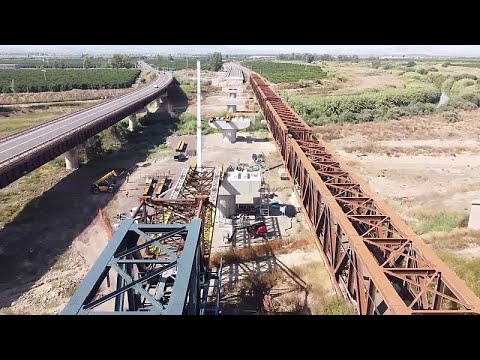
Berliner Boersenzeitung - Hungary: China's CATL battery factory

EUR -
AED 4.185954
AFN 72.947589
ALL 94.294632
AMD 417.830324
ANG 2.040717
AOA 1045.205368
ARS 1683.774482
AUD 1.652987
AWG 2.051656
AZN 1.936427
BAM 1.957791
BBD 2.287406
BDT 139.692031
BGN 1.927281
BHD 0.42823
BIF 3384.485685
BMD 1.139809
BND 1.473518
BOB 7.848117
BRL 5.900221
BSD 1.13574
BTN 107.155009
BWP 15.497553
BYN 3.232172
BYR 22340.254248
BZD 2.284202
CAD 1.61687
CDF 2587.365958
CHF 0.921797
CLF 0.026609
CLP 1047.267556
CNY 7.755088
CNH 7.754826
COP 3916.759484
CRC 516.91877
CUC 1.139809
CUP 30.204936
CVE 110.378679
CZK 24.26106
DJF 202.242967
DKK 7.474986
DOP 66.927167
DZD 151.937634
EGP 56.431257
ERN 17.097133
ETB 179.123465
FJD 2.582924
FKP 0.862513
GBP 0.862647
GEL 3.014799
GGP 0.862513
GHS 12.774212
GIP 0.862513
GMD 83.206091
GNF 9951.987623
GTQ 8.664924
GYD 237.635784
HKD 8.938364
HNL 30.389498
HRK 7.53345
HTG 148.444185
HUF 354.030908
IDR 20395.740282
ILS 3.415266
IMP 0.862513
INR 107.583366
IQD 1487.838853
IRR 1567294.214566
ISK 144.02629
JEP 0.862513
JMD 178.999641
JOD 0.808094
JPY 184.143532
KES 147.607196
KGS 99.676239
KHR 4573.750637
KMF 494.677183
KPW 1025.8284
KRW 1754.256722
KWD 0.352884
KYD 0.946479
KZT 550.449323
LAK 25242.107599
LBP 101708.364882
LKR 382.76589
LRD 206.698345
LSL 18.808453
LTL 3.36556
LVL 0.689459
LYD 7.293319
MAD 10.692259
MDL 20.159851
MGA 4841.859197
MKD 61.637914
MMK 2392.971959
MNT 4080.792105
MOP 9.171825
MRU 45.111273
MUR 54.380594
MVR 17.610087
MWK 1969.376428
MXN 19.991963
MYR 4.663073
MZN 72.832523
NAD 18.808453
NGN 1566.52989
NIO 41.79341
NOK 11.286559
NPR 171.447061
NZD 2.017627
OMR 0.438256
PAB 1.135775
PEN 3.886652
PGK 4.984002
PHP 69.821231
PKR 316.069401
PLN 4.286759
PYG 6939.995289
QAR 4.139964
RON 5.239589
RSD 117.401001
RUB 87.877339
RWF 1668.974951
SAR 4.264217
SBD 9.177687
SCR 16.007841
SDG 683.885259
SEK 11.07277
SGD 1.475243
SHP 0.850982
SLE 28.280114
SLL 23901.2267
SOS 649.051375
SRD 42.537564
STD 23591.742763
STN 24.524612
SVC 9.938279
SYP 125.985468
SZL 18.805873
THB 38.063948
TJS 10.49996
TMT 3.989331
TND 3.372273
TOP 2.744387
TRY 53.143533
TTD 7.713978
TWD 36.32035
TZS 2986.796222
UAH 51.068251
UGX 4202.346435
USD 1.139809
UYU 45.566929
UZS 13642.871264
VES 707.539771
VND 29970.704864
VUV 136.721107
WST 3.174934
XAF 656.615967
XAG 0.019708
XAU 0.000282
XCD 3.080391
XCG 2.046917
XDR 0.81662
XOF 656.615967
XPF 119.331742
YER 271.986885
ZAR 18.756463
ZMK 10259.644484
ZMW 20.499663
ZWL 367.017998
  • BCC

    2.1000

    79.76

    +2.63%

  • NGG

    0.5900

    83.42

    +0.71%

  • GSK

    0.8000

    51.89

    +1.54%

  • BTI

    1.0900

    62.48

    +1.74%

  • CMSC

    -0.0190

    22.046

    -0.09%

  • RIO

    1.0800

    95.11

    +1.14%

  • CMSD

    -0.0900

    21.93

    -0.41%

  • AZN

    2.6600

    185.68

    +1.43%

  • BCE

    0.0000

    23.2

    0%

  • BP

    -0.1400

    37.72

    -0.37%

  • RBGPF

    0.0000

    61.3

    0%

  • RYCEF

    0.7000

    18.7

    +3.74%

  • JRI

    0.0100

    12.58

    +0.08%

  • VOD

    0.0500

    13.86

    +0.36%

  • RELX

    -0.2300

    30.92

    -0.74%


Hungary: China's CATL battery factory


China’s Contemporary Amperex Technology Co. Limited (CATL), one of the world’s leading battery manufacturers, is making significant progress on its highly anticipated battery production facility in Hungary. With an investment of several billion euros, the new factory aims to meet the growing demand for electric vehicle (EV) batteries across Europe and further solidify the region’s push toward sustainable mobility.

A Strategic Location:
The factory is situated in Debrecen, eastern Hungary, a location carefully chosen for its advantageous infrastructure, skilled workforce, and proximity to major European automotive hubs such as Germany, Austria, and the Czech Republic. Debrecen’s well-developed logistics network enables CATL to efficiently supply batteries to some of the world’s top carmakers, many of which are currently expanding their EV lineups to comply with the EU’s stricter emissions targets.

Boosting Local Economy and Workforce:
Hungarian officials have enthusiastically welcomed CATL’s presence, citing economic growth and job creation as key benefits. Thousands of direct and indirect jobs are expected to arise from the factory’s construction and eventual full-scale operation. Local universities and technical schools have already initiated programs to train and upskill workers, fostering a long-term partnership between CATL and the Hungarian education sector.

Technological and Environmental Aspects:
CATL’s Hungarian plant is designed to showcase cutting-edge battery technology, featuring advanced research and development capabilities. The company has emphasized its commitment to high efficiency and environmental standards—an essential factor as Europe’s automotive industry strives for greener solutions. Nonetheless, environmental groups in Hungary and neighboring countries have expressed concerns about potential impacts on local ecosystems, water consumption, and waste management. CATL has responded by pledging transparent environmental practices and adherence to EU regulations.

A Key Piece in Europe’s EV Puzzle:
As European governments ramp up policies to combat climate change, automotive manufacturers rely heavily on stable battery supplies for their electrified models. CATL’s new factory in Hungary stands to become a linchpin in the region’s EV supply chain, reducing reliance on Asian imports and contributing to a more robust, localized production infrastructure. Industry analysts believe the plant will not only bolster Europe’s electric vehicle market but also stimulate competition, driving innovation and potentially lowering battery costs.

Whether viewed from the standpoint of industrial expansion, technological advancement, or environmental oversight, CATL’s battery factory in Hungary represents a monumental development in Europe’s journey toward a more sustainable transportation sector. The coming years will reveal just how transformative this Chinese-led investment will be for Hungary, the European automotive industry, and the broader global push for green mobility.