Berliner Boersenzeitung - Chile's Atacama Desert blossoms with life after El Nino rains

EUR -
AED 4.036787
AFN 70.900699
ALL 90.107811
AMD 396.741965
ANG 1.967995
AOA 1009.058022
ARS 1716.111274
AUD 1.639287
AWG 1.981292
AZN 1.874079
BAM 1.956577
BBD 2.214788
BDT 136.774283
BGN 1.949383
BHD 0.414967
BIF 3303.140996
BMD 1.099191
BND 1.418076
BOB 12.927248
BRL 6.455943
BSD 1.099591
BTN 102.519501
BWP 15.533518
BYN 3.28827
BYR 21544.14841
BZD 2.211688
CAD 1.572058
CDF 2511.652198
CHF 0.9275
CLF 0.028111
CLP 1106.379645
CNY 7.329186
CNH 7.335667
COP 3718.322161
CRC 492.27522
CUC 1.099191
CUP 26.392475
CVE 110.308779
CZK 24.424964
DJF 195.792972
DKK 7.474324
DOP 66.193561
DZD 150.655262
EGP 59.159239
ERN 16.487869
ETB 180.495277
FJD 2.512529
FKP 0.835803
GBP 0.836699
GEL 2.846381
GGP 0.835803
GHS 12.927248
GIP 0.835803
GMD 80.822536
GNF 9748.869117
GTQ 8.406992
GYD 229.960471
HKD 8.623787
HNL 29.560732
HRK 7.509636
HTG 144.178533
HUF 370.186176
IDR 20071.39702
ILS 3.615683
IMP 0.835803
INR 102.554708
IQD 1667.161661
IRR 2124917.492176
ISK 137.212037
JEP 0.835803
JMD 174.039072
JOD 0.779295
JPY 175.78431
KES 142.950068
KGS 96.124096
KHR 4474.49088
KMF 493.536751
KPW 989.272506
KRW 1460.253273
KWD 0.342848
KYD 0.916485
KZT 495.098746
LAK 24778.059301
LBP 98481.681212
LKR 366.020281
LRD 184.710539
LSL 18.944543
LTL 3.245626
LVL 0.66489
LYD 7.116825
MAD 10.93634
MDL 20.179468
MGA 4965.015678
MKD 61.491924
MMK 2308.083324
MNT 3957.983279
MOP 8.885663
MRU 44.855966
MUR 51.48591
MVR 16.92048
MWK 1906.518434
MXN 20.831218
MYR 4.522294
MZN 70.236225
NAD 18.945319
NGN 1485.017998
NIO 40.464403
NOK 10.673131
NPR 164.061605
NZD 1.992647
OMR 0.422635
PAB 1.099746
PEN 3.752236
PGK 4.946963
PHP 70.016297
PKR 303.968394
PLN 4.423222
PYG 6894.736373
QAR 3.997587
RON 5.348334
RSD 117.633295
RUB 90.166085
RWF 1627.58297
SAR 4.125787
SBD 8.944165
SCR 15.265241
SDG 661.154928
SEK 11.170575
SGD 1.418094
SHP 0.832216
SLE 25.106926
SLL 23049.494848
SOS 628.455138
SRD 41.065249
STD 22751.039522
STN 24.508724
SVC 9.621819
SYP 14291.684943
SZL 18.940689
THB 37.260377
TJS 10.11532
TMT 3.847169
TND 3.332122
TOP 2.646589
TRY 55.472774
TTD 7.461995
TWD 36.212837
TZS 2923.832238
UAH 49.538761
UGX 4656.848203
USD 1.099191
UYU 44.637716
UZS 13174.228568
VES 1007.549417
VND 28309.670525
VUV 132.946216
WST 3.103326
XAF 655.957
XAG 0.024187
XAU 0.000296228459
XCD 2.97062
XCG 1.981896
XDR 0.777185
XOF 655.957
XPF 119.331742
YER 260.013433
ZAR 19.015684
ZMK 9894.042438
ZMW 22.599175
ZWL 353.939133
SSP 6462.804073
MXV 2.335721
  • CMSD

    -0.1200

    19.81

    -0.61%

  • JRI

    0.0000

    10.77

    0%

  • BCC

    -1.8200

    74.15

    -2.45%

  • CMSC

    -0.2228

    19.53

    -1.14%

  • BCE

    0.2000

    20.34

    +0.98%

  • RIO

    0.0100

    94.17

    +0.01%

  • AZN

    -2.7400

    161.47

    -1.7%

  • GSK

    -1.1800

    48.17

    -2.45%

  • RBGPF

    0.0000

    65

    0%

  • NGG

    0.8800

    75.82

    +1.16%

  • RYCEF

    -0.7300

    19.08

    -3.83%

  • BTI

    -0.4500

    54.4

    -0.83%

  • BP

    0.4700

    43.99

    +1.07%

  • RELX

    -0.0600

    33.18

    -0.18%

  • VOD

    -0.1800

    16.15

    -1.11%

Chile's Atacama Desert blossoms with life after El Nino rains
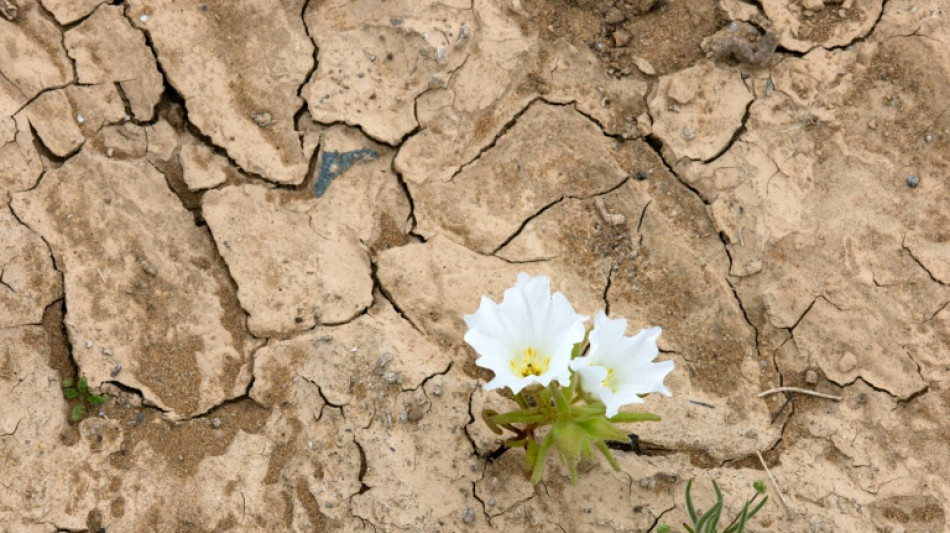
Chile's Atacama Desert blossoms with life after El Nino rains / Photo: Javier TORRES - AFP

Chile's Atacama Desert blossoms with life after El Nino rains

A resplendent display of flowers has bloomed across Chile's Atacama Desert, one of the driest places on earth, after the El Nino climate phenomenon brought heavy rain to the region.

Text size:

Underneath the normally parched earth, millions of seeds and bulbs from around 200 different species spend their days lying in wait for water.

Heavy rain caused by the El Nino weather pattern recently lashed northern Chile, prompting this abundant ensemble of living things to emerge from their hiding place.

Now, vast stretches of violet carpet the desert, and angelic white buds peek out from the cracked ground.

Dozens of tourists pull over to snap pictures of the breathtaking scenery that, with any luck, might even include a rainbow superimposed over a deep red sunset.

Seasonal rain of over 180 millimeters in some parts "had never been recorded before," Cesar Pizarro, head of Atacama biodiversity for Chile's forestry body CONAF, told AFP.

Rainfall seeped deeper than usual into the sand, giving a new lease on life to the nature reserve located about 800 kilometers (500 miles) north of Santiago.

The "flowering desert" phenomenon will peak in October, according to CONAF, which estimates that 15,000 hectares will blossom into a floral paradise.

The current iteration of El Nino is predicted to be the strongest since comparable records began four decades ago.

The phenomenon raises surface temperatures in the central and eastern equatorial Pacific Ocean and causes global changes in winds and rainfall as well as erratic weather conditions.

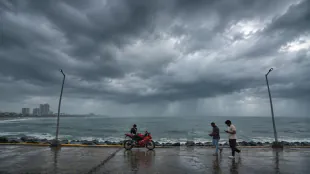
The torrential rains that pounded Chile in July killed 13 people and destroyed or severely damaged around 4,000 homes.

- 'Generates life' -

While acknowledging these devastating effects, Pizarro also highlights that nature can benefit from El Nino.

"Although there is great concern… about the impacts it is causing in many places, it also generates life," he said.

Atacama is witnessing "more than flowers," he added, explaining that insects, snails, birds, reptiles and mammals proliferate too.

Bees get busy with pollination, while beetles feast on their leftovers and fertilize the soil with their nitrogen-rich excrement ahead of the next rainfall.

Pizarro hopes that a massive influx of tourists won't wreak too much damage on the natural haven, stressing the importance of using established footpaths and leaving pets at home.

"For our country, the flowering desert is a source of pride. It is part of our heritage," he said, admiring the yellow beauties sprouting all around him.

"Although there are several deserts that bloom when it rains, the territorial extent and the diversity of species we have here are unique," he said.

(U.Gruber--BBZ)