Arizona Superintendent Tom Horne to Leave Office, Plans Law Practice and Charter School

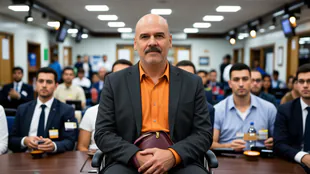
Arizona Superintendent of Public Instruction Tom Horne will leave office in January, ending his second tenure in the role. The 81-year-old Republican announced he intends to return to private legal practice and establish a new charter school focused on serving students living in poverty, rather than retiring from public life.
Tom Horne is stepping down as Arizona’s superintendent of public instruction in January, concluding his second term in the position. The 81-year-old Republican official announced that he will not be retiring from professional life but instead plans to return to the practice of law and establish a charter school designed to serve students living in poverty.
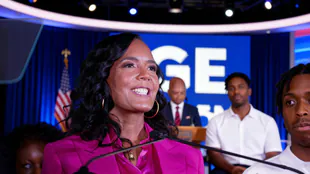
Horne, who previously served as superintendent from 2003 to 2011, will hand over the department’s leadership to Democrat Teresa Leyba Ruiz following the recent general election. His departure marks the end of a long career in Arizona public service that includes tenures as state attorney general and as a member of the Paradise Valley school board.
During his current term, Horne oversaw significant expansion in the state’s school choice programs while simultaneously implementing stricter oversight measures for the Empowerment Scholarship Account (ESA) program. He described his upcoming plans as a continuation of his educational focus rather than a retreat from public engagement.
"I’ve spent 16 years in elected statewide office, and overall, between local and legislative elections, I’ve won 36 and lost three," Horne said in an interview regarding his career record. "If I was a baseball team, that’d be a pretty good record. I can’t retire."
Horne stated that for the next two years, he intends to practice law while working toward licensure to open a charter school. He outlined a specific model for the institution, aiming to enroll approximately half of its student body from low-income backgrounds.
"Our plan is to try and start a charter school where about half the students are in poverty, to prove they can learn just as well as other kids if they’re properly taught," he said.
Reflecting on his current tenure, Horne highlighted interventions aimed at underperforming schools. He cited "Project Momentum," an initiative targeting the bottom 5 percent of schools by performance metrics. According to Horne, after one year of intervention, 80 percent of those schools were no longer classified in the bottom tier.
The department also adopted a school located near the state Capitol, which serves a high population of students in poverty. Horne reported that math scores at that school increased by 27 percent after one year of departmental support. He attributed this improvement to weekly visits from department staff who assisted with leadership training for superintendents and principals, as well as instructional support for teachers.
Horne noted that the department has expanded its leadership training programs significantly, having trained 11,000 teachers and leaders during his term.
A major focus of Horne’s administration was the oversight of the ESA program, which Arizona pioneered. As the program grew from 11,000 students to 110,000, Horne implemented strict financial controls that drew both praise and criticism. He established two primary rules for expenditures: funds must be used for valid educational purposes and must represent reasonable costs.
Horne recounted rejecting requests for items such as crystals, Rolex watches, and $24,000 golf simulators. He also famously denied a request for a $16,000 cello, arguing that comparable instruments could be purchased for less.
However, Horne acknowledged that the program’s administrative capacity did not scale with its enrollment. While the number of administrators remained static, the volume of transactions increased tenfold. This disparity led to approval delays extending to 90 or 120 days.
To prevent system collapse, Horne shifted from pre-approval audits for small expenses to post-payment audits for amounts under $2,000. He defended this move as necessary to ensure timely disbursement of funds, noting that audits would recover any improper payments afterward.
Horne also discussed the department’s adoption of artificial intelligence to audit ESA expenses. He described the system as currently operational but imperfect, requiring human oversight. He predicted that once the AI reaches a level of accuracy where it can audit all transactions in advance, the $2,000 limit for post-payment audits would be eliminated.
Horne lost the Republican primary for superintendent to State Treasurer Kimberly Yee, who subsequently lost the general election to Ruiz. When asked about the path forward for Republicans after a difficult election cycle, Horne advised party members to ignore the conservative advocacy group Turning Point USA and prioritize candidates with broader electoral viability.
"Politics should be about obtaining government power to do good for the community and the state, whereas their focus is on winning intramural fights that are meaningless," he said.
Horne reported that his transition meeting with Ruiz was cooperative. He described her as a lifelong educator and expressed a desire to support her success in continuing the department’s academic improvement efforts.
One of Horne’s final major initiatives involved addressing proficiency rates among Native American students. Upon taking office, he noted that math and reading proficiency for this demographic was approximately 3 percent. He directed the Office of Indian Education to shift its focus toward academics, replacing the office head after encountering resistance.
Horne cited subsequent gains in math scores for several districts: Ganado Unified increased by 159 percent, Red Mesa by 149 percent, and Baboquivari by 197 percent. He attributed these results to direct departmental support sent to the schools.
"That’s been pretty much my philosophy of what we’re here for," Horne said. "We’re here to help the schools do better academically."
Ruiz is scheduled to assume office in January, bringing a Democratic leadership to the Arizona Department of Education as Democrats prepare to take control of the state Legislature next year.
(H.Schneide--BBZ)